Tips
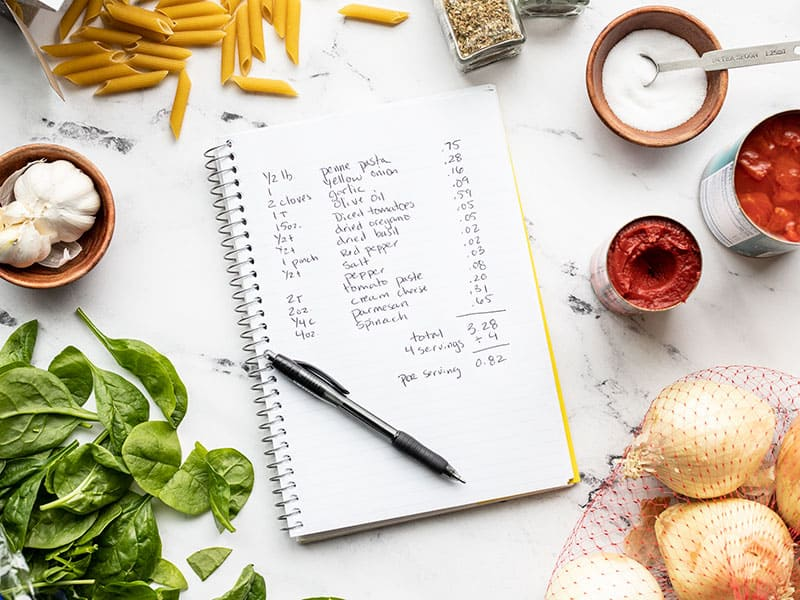
Here are some money saving tips to save on your weekly grocery bill.
- Eat before you shop
- Utilize coupons that actually save you money. Some stores jack up the price and then offer coupons to get you in the door.
- Avoid food waste by pre-planing your meals in advance and only buying the items needed to make the amount required
- Fruits and vegetables are usually cheaper and have more flavor and nutrients when in season
- Use the price per meal as a guideline, not the price per pound
- Buy close dated meat; then repackage and freeze
- Buy food in larger quantities or family sized packs, since the unit price is typically lower.
- Foods, like grains, beans, lentils, nuts, and dried fruit, can be purchased in bulk and stored in airtight containers for a longer period of time.
- Purchase meat and grocery items from a big box stores if possible. They typically provide their customers with betting pricing as they buy in bulk and pass the savings along to the consumer. I hate saying it, but smaller independents simply don’t have the buying power of the larger chains
- Try and use “budget brands” when possible. Sam’s Club brands are simply more well-known brands repackaged
- Cook in larger batches and freeze excess or leftovers for future use.
- Cook a meal with multiple follow-up meal options available. For example, cook a larger roast on Sunday, and use some of the leftover meat for beef burritos on Monday, and any leftover meat for vegetable soup on Tuesday. If cooking chili on Wednesday, used any leftovers for chili dogs on Thursday, and so on.
- Always comparison price shop (but consider the time and distance you have to travel for that savings)
- Consider using grocery pickup instead of going into the store to prevent impulse buys. Also, stick to your grocery list and avoid the pop, snack, and candy isles.
- Try eating more simply. The old adage “Eat breakfast like a king, lunch like a businessman, and dinner like a pauper” still holds true today. I still remember my grandmother cooking beans, cornbread, okra, fried green tomatoes, and a cut up raw onions for dinner. It still makes me hungry today
- Stop eating out. Learn to cook a few simple meals a week, and gradually expand your palate and your wallet/purse will expand also
- Learn to cook a couple of vegetarian/vegan options to utilize less meat
- Stop using parchment paper, use a Silpat
- Shop online and have it delivered. Again, I hate to say it, but Amazon pantry shopping can have a profound impact on your grocery budget
- Employ slow cookers to use cheaper cuts of meat. Eye of the round, when cooked low and slow in an oven all day, can be as tender as a filet!
- Stop buying whole milk and use half & half instead. It lasts four times longer and can be thinned as needed.
- Using tomato paste instead of opening a whole can of tomato sauce can increase savings
- Making a quick sandwich? Don’t use paper plates, use a coffee filter. Same for small snack bags.
- Don’t forget to check the reduced section at Gordons Food Service stores or other wholesalers. It is miraculous the deals you can find there sometimes.
- Often Asian/Latin stores have excellent pricing
Cheapest Meats to Consider
Meat prices vary by type.
For example, some of the cheapest meat types are listed in the selection below, showing savings.
- Chicken Thighs/Leg Quarters
- Whole fryers (depends on area and availability)
- Pork Shoulders
- Pork Butt
- Pork Loin (in cryovac)
- Costco/Sam’s Club Rotisserie Chicken
- Ham/Turkey around special holidays
- London Broil
- Beef Brisket
- Chuck Eye Steak
Links
https://www.ams.usda.gov/market-news.
For 100 years, the AMS has provided free, unbiased price and sales information. It helps with the marketing and distribution of farm commodities.
Each year, Market News issues thousands of reports. They provide the industry with key wholesale, retail and shipping data.
These reports give farmers, producers, and other agricultural businesses the information they need. They help evaluate market conditions, identify trends, and make purchasing decisions. They also help monitor price patterns, assess transportation equipment needs, and track movement accurately.
Visit https://www.usda.gov/oce/ag-outlook-forum/commodity-outlooks for the outlooks released during USDA’s annual Agricultural Outlook Forum.
Additionally, it provides links to those outlooks.
https://agecon.tamu.edu/weston-agrifood-sales-program/#Research – The Texas A&M University Food Price Predictor study integrates historical data and current market trends. Additionally, it uses predictive models to offer a detailed projection of future retail meat prices.
The Consumer Price Index for All Urban Consumers (CPI-U) is data released each month.
Additionally, it represents the U.S. city average by detailed expenditure category and outlines retail prices for beef, pork, and chicken.